Contents
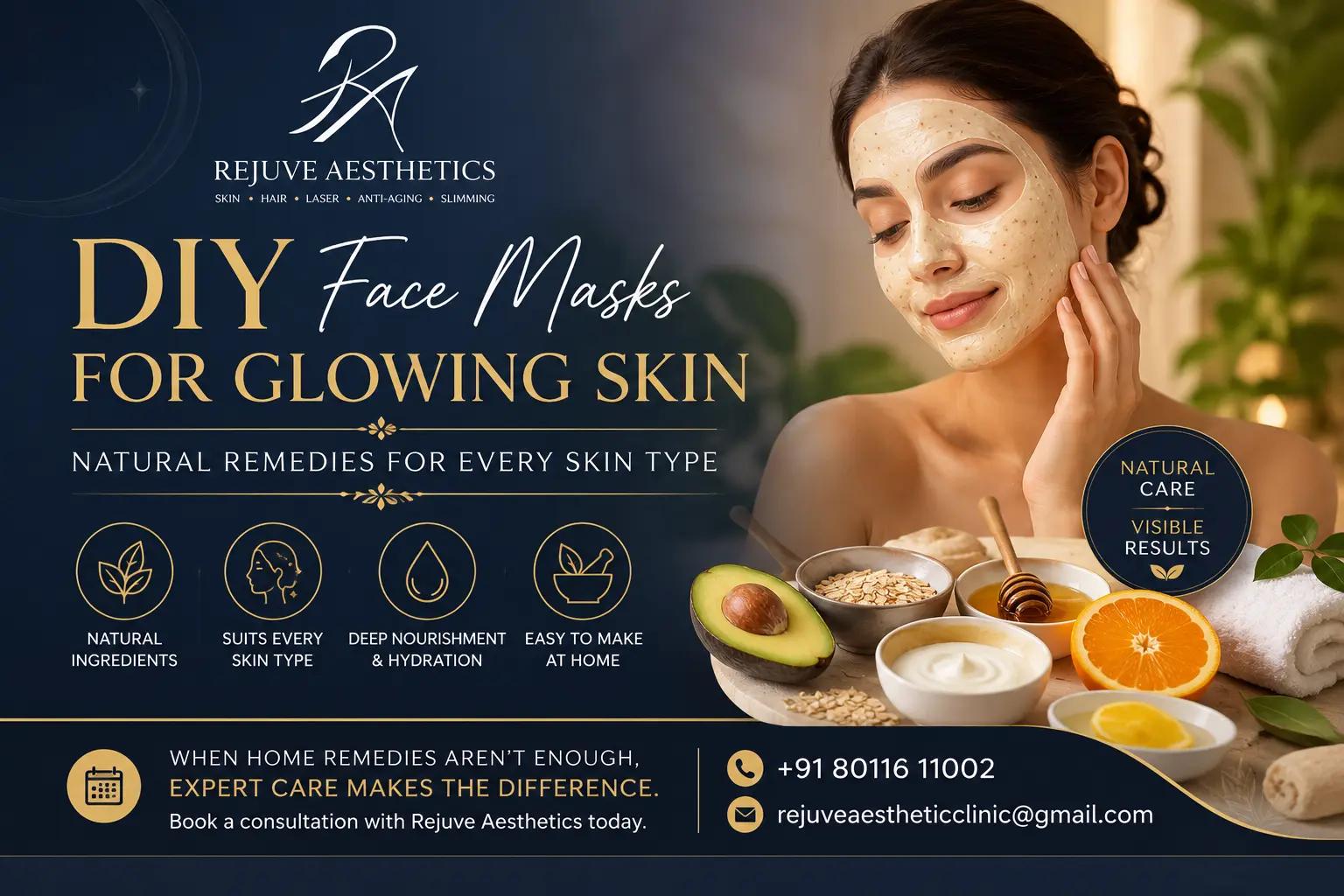
Pollution, stress, and constantly shifting weather all take a visible toll on your skin — leaving it dull, dry, oily, or irritated depending on the day. The good news is that you don't need an expensive skincare haul to fight back. Some of the most effective remedies for glowing, healthy skin are sitting in your kitchen right now.
Here are four simple, natural DIY face masks, each targeted at a specific skin concern — plus a look at when it's time to move from kitchen remedies to a professional treatment, like the medi-facials offered at Rejuve Aesthetics, Guwahati's trusted aesthetic clinic since 2015.
1. Dry Skin: Avocado and Honey Mask
Avocado is rich in natural fats that deeply moisturise, while honey locks in hydration and soothes the skin.
What you'll need:
- Half a ripe avocado
- Half a cup of honey
How to make it: Mash half a ripe avocado in a bowl until smooth, then mix in half a cup of honey until you get a smooth, even paste. A blender works well too if you prefer a silkier consistency.
How to use it: Apply a thin, even layer over clean skin and leave it on for 15–25 minutes. Rinse off with lukewarm water to reveal noticeably softer, smoother skin.
2. Oily Skin: Orange Peel and Yogurt Mask
Dried orange peel is a natural source of vitamin C and has mild astringent properties that help control excess oil, while yogurt gently balances and soothes the skin.
What you'll need:
- Dried orange peels
- Two spoons of unsweetened yogurt
How to make it: Dry orange peels in the sun for a day or two, then grind them into a fine powder using a blender or mixer. Mix the powder with two spoons of unsweetened yogurt to form a smooth paste.
How to use it: Apply evenly to your face and let it sit for about 15 minutes before washing off. Skin should feel noticeably fresher and less oily.
3. Sensitive or Red Skin: Oatmeal and Honey Mask
Oats are naturally anti-inflammatory and gentle, making this an ideal mask for sensitive or easily irritated skin, while honey adds a calming, nourishing finish.
What you'll need:
- Half a cup of instant oats
- Honey (amount based on preferred consistency)
How to make it: Blend instant oats into a fine, flour-like powder. Mix in honey gradually — more honey for a thinner consistency, less for a thicker one.
How to use it: Apply the mixture to your face and leave it on until it begins to dry. Rinse off thoroughly with water; it can feel slightly sticky to remove, but it leaves skin visibly calmer and more nourished.
4. Dull, Lifeless Skin: Lemon and Honey Mask
Lemon's natural acidity helps brighten dull skin, while honey balances it out and prevents excessive dryness or irritation.
What you'll need:
- One whole lemon
- 3–4 spoons of honey
How to make it: Squeeze the juice from one lemon and mix it with 3–4 spoons of honey. If you have sensitive skin, use more honey and less lemon juice to reduce the risk of irritation.
How to use it: Apply to your face and let it sit for at least 15 minutes. A mild tingling sensation is normal, but if it becomes uncomfortable, wash it off sooner. Skin should look brighter and more radiant almost immediately after rinsing.
A Few Tips Before You Try Any DIY Mask
- Patch test first. Apply a small amount on your inner arm or jawline and wait 24 hours to check for any reaction, especially if you have sensitive skin.
- Don't overdo it. Once or twice a week is enough for most DIY masks — overuse can strip or irritate the skin.
- Follow up with moisturiser. Natural masks can be drying for some skin types, so always moisturise afterward.
- Know your limits. DIY masks are great for maintenance and glow, but persistent acne, scarring, pigmentation, or sensitivity issues are best addressed with a proper skin consultation rather than home remedies alone.
When Your Skin Needs More Than a Kitchen Remedy
DIY masks are wonderful for weekly maintenance, but they work on the surface — they can't address deeper concerns like acne scarring, stubborn pigmentation, sun damage, or early signs of ageing. When natural remedies stop moving the needle, a medically supervised treatment is the next logical step.
This is where Rejuve Aesthetics, one of Guwahati's most trusted aesthetic clinics since 2015, comes in. Rather than a one-size-fits-all facial, Rejuve's Advanced HydraFacial and medi-facial treatments combine ultrasonic exfoliation, deep hydration, and serum infusion — delivering the same "glow" you're chasing with DIY masks, but at a clinical depth home remedies simply can't reach.
A few reasons Guwahati residents choose Rejuve Aesthetics for deeper skin concerns:
- Founder-led expertise: Dr. Sharadi Shreemoyee, founder of Rejuve Aesthetics, has over 15 years of experience and a Diploma from the Canadian Board of Aesthetic Medicine, and is recognised as a pioneer in advanced aesthetic treatments across Northeast India.
- Customised treatment plans: Every medi-facial or skin treatment is tailored after a detailed consultation of your skin type and concerns — not a generic package.
- Medical-grade technology: Only FDA-cleared and CE-marked devices are used, for safe, consistent, long-lasting results.
- Proven track record: Over 10,000 patients treated across Assam and Northeast India since 2015.
If your skin needs more than an avocado mask can offer, a personalised consultation at Rejuve Aesthetics is a good next step.
Ready to take your skincare beyond the kitchen? Book a free consultation with Rejuve Aesthetics — Guwahati's trusted aesthetic clinic since 2015 — and get a personalised skin treatment plan designed for your skin type and goals.
📍 2nd Floor, Gulshan Grand, Supermarket Traffic Point, Dispur, Guwahati, Assam 781006 📞 +91 80116 11002
Rejuve Aesthetics
Medical-grade expertise delivered with a passion for holistic aesthetic wellness and skin health. We are dedicated to providing evidence-based insights and treatments to support skin health and confidence.
Common Questions
How often should I use a DIY face mask?
Most natural face masks are best used once or twice a week. Daily use, especially of exfoliating ingredients like lemon or orange peel, can irritate the skin over time.
Can DIY face masks replace a regular skincare routine?
No. DIY masks are a great weekly addition, but a proper daily routine — cleansing, moisturising, and sun protection — is still essential for long-term skin health.
Is lemon safe to use directly on the skin?
Lemon can cause sensitivity or mild irritation, especially on sensitive skin or with sun exposure afterward. Diluting it with honey, patch testing first, and avoiding direct sun exposure after use is recommended.
Which mask for combination skin?
For combination skin, the oatmeal and honey mask is generally the safest starting point, as it's gentle enough for both oily and dry areas of the face.
What should I do if a DIY mask doesn't improve my skin?
If your skin concern persists despite regular care — such as acne, scarring, or hyperpigmentation — it's a sign the issue needs a more targeted, professional approach rather than home remedies alone. A consultation at a clinic like Rejuve Aesthetics can help identify the right medi-facial or skin treatment for your specific concern.