Contents
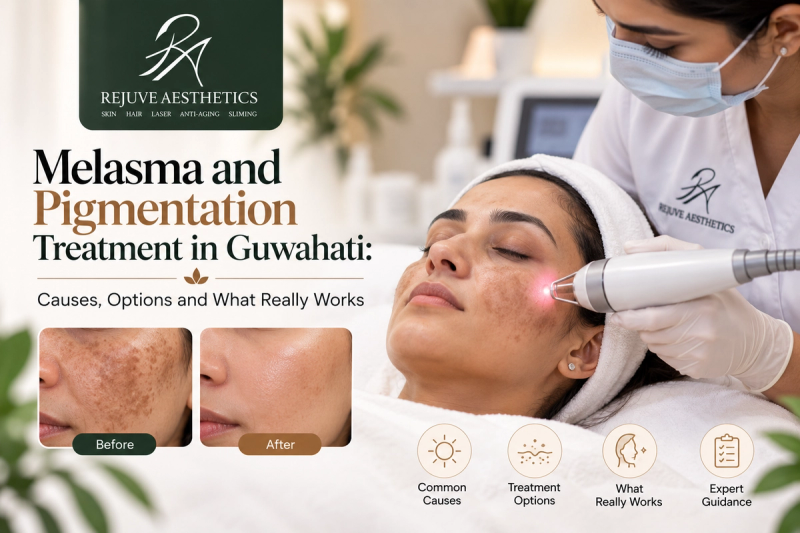
You finally got your acne under control. The pimples are gone. But the marks they left behind are still there, dark, uneven, and stubborn. This is called acne pigmentation, and it is one of the most common skin concerns people bring up after dealing with acne.
If you are looking for acne pigmentation treatment in Guwahati, this guide explains what causes these marks, why they take so long to fade, and how Rejuve Aesthetics treats this condition safely and effectively.
What Is Acne Pigmentation?
Acne pigmentation refers to the dark spots or patches left behind after a pimple heals. In medical terms, this is often called post-inflammatory hyperpigmentation, or PIH for short.
It happens because acne causes inflammation in the skin. When a pimple heals, the skin sometimes produces extra melanin, the pigment that gives skin its colour, in that exact spot. This extra melanin shows up as a dark or brownish mark, even after the pimple itself is long gone.
It is important to understand that acne pigmentation is different from acne scars. Scars usually involve a change in the skin's texture, like pits or raised marks. Pigmentation is a change in skin colour only, with the texture staying mostly the same. Many people have both scars and pigmentation together, which is why a proper skin check matters before starting any treatment.
Why Do Some People Get More Acne Pigmentation Than Others?
Not everyone who has acne ends up with the same amount of pigmentation. Several factors decide how bad it gets.
Skin tone plays a big role. People with medium to darker skin tones tend to produce more melanin in response to inflammation, which means they are more likely to develop noticeable pigmentation after acne. This is very relevant for a large part of the population in Guwahati and the wider Northeast India region.
Picking, popping, or squeezing pimples is another major cause. This kind of physical trauma to the skin makes inflammation worse, which in turn increases the chances of dark marks forming. Sun exposure after a breakout can also make existing pigmentation darker and harder to fade, since UV rays trigger more melanin production in already inflamed skin.
How long the acne lesion stays inflamed also matters. Deeper, more severe acne, like nodules and cysts, tends to leave behind more noticeable pigmentation compared to a small whitehead that clears up quickly.
Why Does Acne Pigmentation Take So Long to Fade on Its Own?
Many people are told that pigmentation will fade with time. This is true, but only partly.
Mild pigmentation can fade on its own over several months as the skin naturally renews itself. But in many cases, especially with darker or long-standing marks, the pigment sits deep enough in the skin that natural renewal alone is very slow, sometimes taking a year or more without any real improvement.
Continued sun exposure, new breakouts, and using the wrong skincare products can also keep triggering the pigment-producing cells, which means the marks never really get the chance to fade. This is why so many people feel stuck with the same dark spots for months, or even years, without professional help.
What Are the Treatment Options for Acne Pigmentation?
Acne pigmentation treatment in Guwahati has come a long way, and there are now several effective options, often used together for the best results.
Chemical peels are one of the most common treatments. They use a controlled chemical solution to remove the top damaged layers of skin, encouraging fresh, more even-toned skin to grow in its place. Different strengths of peels are used depending on how deep the pigmentation is.
Topical treatments with ingredients that slow down melanin production are often prescribed alongside in-clinic procedures. These are usually part of a daily skincare routine and work gradually over weeks.
Laser and light-based treatments target the pigment directly, breaking it down so the body can clear it away naturally. These are especially useful for pigmentation that has not responded well to peels or topical treatments alone.
Micro-needling can also help in some cases, especially when pigmentation is combined with early scarring, since it supports overall skin renewal.
Sun protection is not a treatment on its own, but it is an essential part of any pigmentation plan. Without consistent sunscreen use, even the best in-clinic treatment can be undone by new pigment forming from sun exposure.
The right combination depends entirely on your skin type, how dark the pigmentation is, and how your skin responds to treatment. This is exactly why acne pigmentation treatment in Guwahati should always start with a proper consultation, rather than picking a treatment off the internet.
How Long Does It Take to See Results?
This is one of the most common questions people ask, and it is important to have realistic expectations.
Acne pigmentation treatment in Guwahati is a gradual process. Most people start noticing visible improvement after a few sessions, usually over four to eight weeks, depending on the treatment used. Deeper or long-standing pigmentation can take a few months of consistent treatment to show significant fading.
It also helps to know that pigmentation rarely disappears completely overnight. The goal of treatment is to steadily even out the skin tone and reduce the visibility of marks, rather than promising an instant, total fix.
Can New Acne Cause New Pigmentation During Treatment?
Yes, this is a real concern, and it is one reason why treating active acne and treating existing pigmentation often need to happen together.
If new breakouts keep appearing while you are being treated for old pigmentation, new marks can form even as the old ones are fading. This is why, at Rejuve Aesthetics, the treatment plan usually looks at your acne and pigmentation together, rather than treating pigmentation in isolation while ignoring ongoing breakouts.
Why Choose Rejuve Aesthetics for Acne Pigmentation Treatment in Guwahati?
Rejuve Aesthetics has treated over 10,000 patients and uses FDA-cleared technology across its skin treatments, including those for acne pigmentation. The clinic was founded in 2015 and has built a strong reputation for aesthetic and skin care in Guwahati and the wider region.
The clinic is led by Dr. Sharadi Shreemoyee, who holds a diploma from the Canadian Board of Aesthetic Medicine and brings over 15 years of experience in aesthetic medicine. She works closely with Dr. Dhanvi and Dr. Hemanta Kalita, who bring additional expertise to skin pigmentation and acne-related treatments at the clinic.
At Rejuve Aesthetics, acne pigmentation treatment in Guwahati begins with a detailed assessment of your skin tone, the depth and cause of your pigmentation, and any active acne that needs to be managed alongside it. This helps the team build a treatment plan suited to your exact skin, instead of applying the same generic approach to everyone.
Given how common darker skin pigmentation is among people in Guwahati and the Northeast India region, the clinic's experience with treating pigmentation safely, without causing further discolouration, is especially valuable.
Tips to Support Your Treatment at Home
While in-clinic acne pigmentation treatment in Guwahati does most of the work, a few daily habits can help your results last longer and appear faster.
Wearing sunscreen every single day, even when it is cloudy or you are mostly indoors, is one of the most important habits for anyone treating pigmentation. Avoiding picking or touching active acne is equally important, since this directly reduces the chances of new marks forming. Following the exact skincare routine recommended by your treating physician, rather than mixing in random products from social media trends, also plays a big role in how well the treatment works.
Final Thoughts
Acne pigmentation can feel frustrating, especially when the acne itself is already under control but the marks refuse to fade. The good news is that with the right combination of treatments and a bit of patience, most pigmentation can be significantly reduced.
If you have been dealing with stubborn acne marks and home remedies have not helped, a proper skin consultation is the best next step. Book a consultation with Rejuve Aesthetics for acne pigmentation treatment in Guwahati and take the first step toward clearer, more even-toned skin.
Rejuve Aesthetics
Medical-grade expertise delivered with a passion for holistic aesthetic wellness and skin health. We are dedicated to providing evidence-based insights and treatments to support skin health and confidence.
Common Questions
1. What is acne pigmentation?
Acne pigmentation, commonly known as post-inflammatory hyperpigmentation (PIH), refers to dark or brown marks that can remain on the skin after acne heals.
2. How can acne pigmentation be treated?
Depending on the skin and pigmentation, treatment may include topical skincare, chemical peels, laser or light-based procedures, and other in-clinic treatments recommended after a professional assessment.
3. How long does acne pigmentation take to fade?
Mild acne pigmentation may gradually fade over several months. Persistent or darker pigmentation may require professional treatment and consistent skincare for more noticeable improvement.
4. Can acne cause new pigmentation?
Yes. New acne breakouts can cause additional inflammation and may leave new dark marks, particularly in people who are prone to post-inflammatory hyperpigmentation.
5. Does sunscreen help with acne pigmentation?
Yes. Consistent broad-spectrum sunscreen use can help reduce UV-related darkening of existing pigmentation and support the results of pigmentation treatment.