Contents
Dark patches on the cheeks, stubborn tan that never fully fades, or spots that seem to get darker every summer. Pigmentation is one of the most common reasons people in Guwahati visit a skin clinic, and melasma is one of the most frustrating forms of it.
This guide explains the different types of pigmentation, why melasma behaves differently, why the climate in Guwahati can make pigmentation worse, and which treatments genuinely help Indian skin.
Quick answer: Pigmentation treatment in Guwahati usually combines daily sun protection, prescription creams, and in-clinic treatments such as chemical peels, laser toning or medi-facials. Sun spots and tanning often clear well. Melasma can be significantly lightened and controlled, but it has no permanent cure and can return with sun, heat or hormonal changes, so ongoing maintenance matters.
What Is Pigmentation?
Pigmentation means patches of skin that are darker than the surrounding skin. It happens when the skin produces extra melanin, the pigment that gives skin its colour. Indian skin has more active pigment cells, which is why it tans easily and is more prone to dark patches after sun exposure, acne or irritation.
Types of Pigmentation
Not all dark patches are the same, and the type decides the treatment.
Melasma
Brown or grey-brown patches, usually on both cheeks, the forehead, the nose or above the upper lip. It is linked to sun and heat exposure, hormones and genetics, and is more common in women.
Sun Spots and Tanning
Flat brown spots or an overall darkening on sun-exposed areas such as the face, neck, arms and hands. These usually respond well to treatment and sun protection.
Post-Inflammatory Hyperpigmentation
Dark marks left after acne, insect bites, burns, waxing or harsh treatments. This is very common in Indian skin. Read our guide to acne pigmentation treatment in Guwahati if acne marks are your main concern.
Freckles
Small, light brown spots that darken in the sun and lighten in winter. They are often genetic.
Dark Circles and Other Areas
Pigmentation can also affect the under-eye area, neck, underarms and around the mouth. Some of these, such as dark velvety patches on the neck, can be linked to health issues and should be checked. For under-eye darkness, see our dark circle treatment in Guwahati guide.
What Causes Melasma and Pigmentation?
- Sun exposure: UV rays are the biggest trigger. Visible light can also worsen melasma, especially in darker skin
- Heat: heat alone can stimulate pigment cells, which is why melasma often worsens in summer, near stoves or after workouts
- Hormones: pregnancy, birth control pills and hormonal changes can trigger or worsen melasma
- Genetics: melasma often runs in families
- Skin inflammation: acne, allergic reactions and harsh products can leave dark marks
- Wrong products: unprescribed steroid or "fairness" creams can cause rebound pigmentation and damage the skin
Why Pigmentation Can Be Worse in Guwahati
Guwahati has long, hot and humid summers and strong sunlight for much of the year, followed by a heavy monsoon. This combination can make pigmentation harder to control:
- Strong sun for most of the year means constant UV exposure, even on cloudy days
- Heat and humidity can stimulate pigment cells and worsen melasma
- Sweat and humidity wash sunscreen off faster, so protection wears off sooner than people expect
- Humidity can trigger acne in some people, which then leaves dark marks
- Long commutes and outdoor work add daily sun exposure without people noticing
This is why a pigmentation plan in Guwahati has to include realistic sun protection habits, not just in-clinic treatment.
Pigmentation Treatment Options That Work
The best results usually come from combining several approaches. Your plan depends on the type and depth of pigmentation and your skin type.
1. Daily Sun Protection
No pigmentation treatment works for long without sun protection. Use a broad-spectrum sunscreen of SPF 30 or higher every day, including indoors near windows. For melasma, a tinted sunscreen can help because it also blocks some visible light. Reapply every 2 to 3 hours outdoors, and more often if you sweat.
2. Prescription Creams
Doctors may prescribe creams containing ingredients such as azelaic acid, kojic acid, tranexamic acid, niacinamide or, for a limited period, hydroquinone-based combinations. These lighten existing pigment and reduce new pigment production.
Important: do not buy steroid-containing or "fairness" creams over the counter. Used without supervision, they can thin the skin, cause redness and acne, and make pigmentation worse once stopped.
3. Chemical Peels
Peels such as glycolic, lactic, mandelic or depigmentation peels remove pigmented surface cells and help creams work better. A series of 4 to 6 sessions is common. Peels must be chosen carefully for Indian skin, as a peel that is too strong can cause new pigmentation. If you are wondering whether aesthetic treatments are safe for sensitive or darker skin, our safety guide explains the risks honestly.
4. Laser Toning
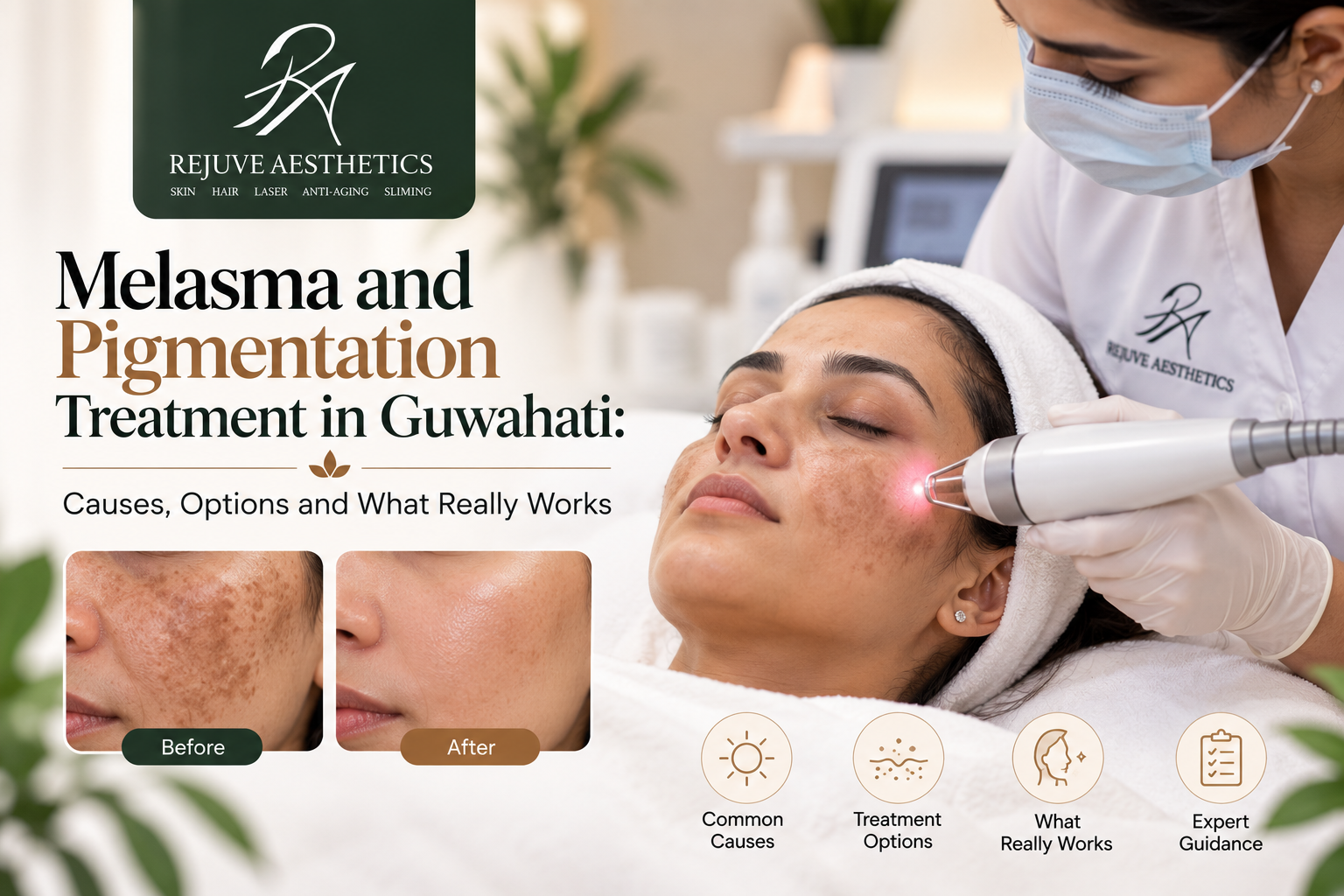
Q-switched laser toning breaks up pigment into tiny particles for the body to clear. It can help tanning, sun spots and some melasma when used at gentle settings over several sessions. For melasma, lasers are usually an add-on to creams and sun protection, not a standalone cure, because aggressive laser use can trigger rebound pigmentation. Read more in our guide to laser treatment in Guwahati.
5. IPL and Medi-Facials
IPL photofacials work well for sun spots and uneven tone, but they need extra caution for melasma. Medi-facials such as the Korean de-tanning facial, BB Glow and brightening facials can improve overall tone and glow with no downtime. Explore our medi-facials in Guwahati.
6. Skin Boosters and Regenerative Treatments
Treatments such as PDRN (salmon DNA), exosome therapy and MNRF combined with brightening serums can support skin repair and improve uneven tone in selected cases. These are usually part of a wider plan. See our anti-aging and skin rejuvenation treatments.
Which Treatment Suits Which Type of Pigmentation?
- Tanning: Korean de-tanning facial, light peels, laser toning and sun protection
- Sun spots: laser toning, IPL and peels
- Acne marks: peels, prescription creams and treating the active acne first
- Melasma: strict sun protection, prescription creams and gentle peels or laser toning, with maintenance
- Freckles: laser toning or IPL, with sun protection to stop them darkening again
- Dull, uneven tone: medi-facials, peels and skin boosters
Can Melasma Be Cured Permanently?
Honestly, no. Melasma can be lightened significantly, sometimes until it is barely visible, but there is no permanent cure. It can return with sun exposure, heat, pregnancy or hormonal changes.
The goal of melasma treatment is control: lighten the patches, then keep them light with daily sunscreen, a maintenance cream and occasional sessions. Be cautious of any clinic that promises to remove melasma permanently in a few sessions.
How Long Does Pigmentation Treatment Take?
- Tanning: often improves within a few sessions and 4 to 6 weeks
- Sun spots and acne marks: usually 2 to 4 months of combined treatment
- Melasma: usually 3 to 6 months to see a clear improvement, followed by ongoing maintenance
Results are gradual. Most people notice the first changes after 4 to 8 weeks of consistent treatment and sun protection.
Pigmentation Treatment Cost in Guwahati
The cost depends on the treatment, the number of sessions and whether prescription creams are part of the plan. As a guide, chemical peels for pigmentation typically cost ₹2,000 to ₹7,500 per session in Guwahati, while stronger depigmentation peels can cost more. See our full guide to aesthetic treatment cost in Guwahati for typical price ranges and tips on budgeting for a complete course.
Is Pigmentation Treatment Safe for Indian Skin?
Yes, when treatments are chosen for your skin type and increased gradually. The main risk in Indian skin is that aggressive peels or lasers can trigger new pigmentation, so the safest approach is usually a gentler, steady plan rather than a quick, harsh one.
To understand common side effects and the questions to ask before treatment, read our honest guide: are aesthetic treatments safe?
Tips to Prevent Pigmentation From Coming Back
- Wear sunscreen every day, all year, including during the monsoon
- Reapply sunscreen every 2 to 3 hours outdoors, and after sweating
- Use a hat, umbrella or sunglasses in strong sun
- Avoid heat triggers where you can, such as saunas and long periods near a hot stove
- Do not pick acne or scratch insect bites
- Avoid over-the-counter steroid and fairness creams
- Keep up maintenance treatment as advised, even after your skin clears
Pigmentation Treatment at Rejuve Aesthetics, Dispur
At Rejuve Aesthetics, a trusted aesthetic clinic in Guwahati, pigmentation treatment starts with identifying the type and depth of your pigmentation. We then build a plan that combines the right in-clinic treatment, home care and sun protection for your skin, and adjust it as your skin responds.
Not sure what to expect? Our guide to an aesthetic clinic consultation in Guwahati explains your first visit step by step. You can also explore all our aesthetic treatments in Guwahati or meet our specialists. Consultations are free and come with no obligation.
Rejuve Aesthetics
Medical-grade expertise delivered with a passion for holistic aesthetic wellness and skin health. We are dedicated to providing the latest insights and treatments to help you look and feel your best.
Common Questions
What is the best pigmentation treatment in Guwahati?
The best treatment depends on the type of pigmentation. Most plans combine daily sunscreen, prescription creams and in-clinic treatments such as chemical peels, laser toning or medi-facials, chosen after a skin assessment.
Can melasma be cured permanently?
No. Melasma can be lightened significantly and kept under control, but it has no permanent cure and can return with sun, heat or hormonal changes. Ongoing sun protection and maintenance help keep it light.
What causes melasma?
Melasma is linked to sun and heat exposure, hormonal changes such as pregnancy or birth control pills, and genetics. Visible light can also worsen it in darker skin types.
Why does pigmentation get worse in summer?
Stronger sunlight and heat both stimulate pigment cells. In humid weather, sweat also washes off sunscreen faster, so protection wears off sooner.
Which is better for pigmentation, chemical peel or laser?
Both can help. Peels suit surface pigmentation, tanning and acne marks, while laser toning helps sun spots and some melasma. They are often combined, and the choice depends on your skin and pigmentation type.
Is laser safe for melasma?
Gentle laser toning over several sessions can help some melasma, usually alongside creams and sunscreen. Aggressive laser settings can cause rebound pigmentation, so treatment should be cautious and carefully planned.
How long does pigmentation treatment take?
Tanning can improve within 4 to 6 weeks. Sun spots and acne marks often take 2 to 4 months, and melasma usually needs 3 to 6 months to show clear improvement, followed by maintenance.
Can I use fairness or steroid creams for pigmentation?
No. Over-the-counter steroid and fairness creams can thin the skin, cause redness and acne, and make pigmentation worse once stopped. Use prescription creams only under medical supervision.
Which sunscreen is best for pigmentation?
A broad-spectrum sunscreen with SPF 30 or higher, reapplied every 2 to 3 hours outdoors. For melasma, a tinted sunscreen adds protection against visible light.
How much does pigmentation treatment cost in Guwahati?
It depends on the treatment and number of sessions. Chemical peels for pigmentation typically cost ₹2,000 to ₹7,500 per session in Guwahati, with stronger depigmentation peels costing more.
Where can I get pigmentation treatment in Guwahati?
Rejuve Aesthetics in Dispur, Guwahati offers pigmentation and melasma treatment, including chemical peels, laser toning, IPL, de-tanning facials and skin boosters, with a free first consultation.