Contents
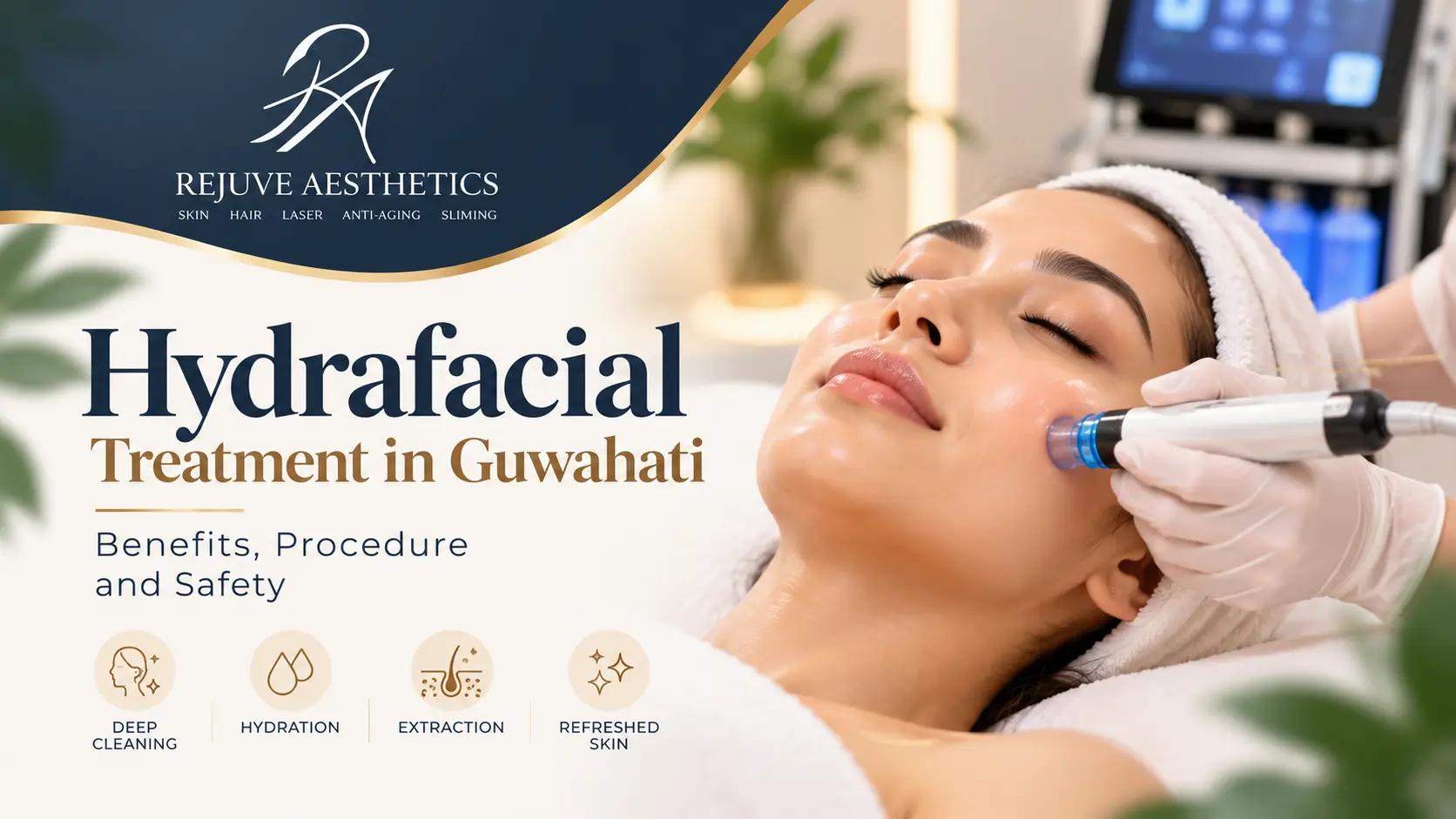
Hydrafacial is a multi-step facial treatment that combines cleansing, exfoliation, extraction and hydration. It may be considered by people looking to address concerns such as dry skin, surface congestion, uneven texture and dullness. The suitability and expected effects depend on individual skin characteristics, the treatment protocol and the products used.
Rejuve Aesthetics is located in Dispur, Guwahati, Assam, and lists skin-care and facial treatments among its services. People considering a Hydrafacial should understand how the procedure works, its potential benefits and limitations, and the precautions to consider before undergoing treatment.
This guide explains the Hydrafacial procedure, common reasons people consider it, possible side effects, aftercare and questions to discuss with a qualified practitioner.
What Is a Hydrafacial?
Hydrafacial is a facial treatment that uses specialised equipment and skincare solutions to cleanse and exfoliate the skin, help remove surface debris and apply hydrating products. The exact steps depend on the device, products and treatment protocol used.
Unlike a basic cleansing routine at home, a professional facial treatment may combine several steps in one session. However, the term Hydrafacial should be used accurately to describe the specific treatment and equipment being provided.
The procedure is generally intended to improve aspects of the skin's surface appearance and hydration. It does not replace medical diagnosis or treatment for persistent acne, inflammatory skin conditions, significant pigmentation or other dermatological concerns.
What Skin Concerns May Hydrafacial Address?
Hydrafacial may be considered for selected cosmetic skin-care concerns, depending on an individual's skin condition and treatment suitability.
1. Dryness and Dehydrated Skin
Hydrating skincare products may temporarily improve the feel and appearance of dry or dehydrated skin. The effects depend on the products used and the underlying cause of the dryness.
Persistent dryness, itching, redness or skin irritation may require a medical assessment rather than a facial treatment alone.
2. Dull-Looking Skin
Exfoliation helps remove some dead skin cells from the skin's surface. Some people may notice a temporary improvement in skin texture or brightness following treatment.
Results vary, and a facial procedure cannot guarantee a particular complexion or degree of radiance.
3. Surface Congestion and Visible Pores
Cleansing and extraction techniques may help remove some surface debris and material from congested pores. The appearance of pores varies according to factors such as genetics, oil production and skin structure.
Hydrafacial does not permanently close or eliminate pores, and results may be temporary.
4. Uneven Skin Texture
Exfoliation and hydration may help improve the appearance and feel of the skin's surface in some individuals. The effect depends on the nature of the concern and the treatment protocol.
Deeper acne scars, persistent roughness and other structural skin changes may require a separate clinical assessment and different treatment options.
5. Oily Skin
People with oily skin may consider treatments involving cleansing and extraction. However, oil production is influenced by several factors, and a facial treatment does not permanently regulate it.
A suitable skincare routine and, where necessary, medical evaluation may be needed to manage persistent oiliness or acne.
6. Skin Preparation Before an Event
Some people consider a facial treatment before a wedding, celebration or professional event. Because skin can react unpredictably to skincare products and procedures, the timing should take account of individual sensitivity and the possibility of redness, irritation or breakouts.
A practitioner can explain whether the procedure is appropriate and how much time to allow before an important event.
How Does the Hydrafacial Procedure Work?
A Hydrafacial session may involve several stages. The exact process can differ according to the device and the products selected.
Step 1: Skin Assessment and Cleansing
The practitioner reviews the person's skin concerns and cleanses the treatment area. Relevant information may include skin sensitivity, allergies, existing skin conditions, current skincare products and previous reactions to treatments.
This assessment helps determine whether the planned procedure is appropriate.
Step 2: Exfoliation
The treatment may use a specialised device or skincare solution to remove some dead skin cells and surface impurities.
The intensity and products used should be suitable for the individual's skin condition. Exfoliation may not be appropriate for every person, particularly when the skin is irritated or inflamed.
Step 3: Application of a Peeling Solution
Depending on the protocol, the procedure may include a solution intended to loosen surface debris and support exfoliation.
The ingredients and concentration matter. Patients should ask which products are being used and whether they may cause irritation or interact with other skincare treatments.
Step 4: Extraction
Some protocols use device-assisted suction to help remove surface debris and material from congested pores.
The procedure may cause discomfort in some individuals. The practitioner should adjust the treatment where appropriate and explain any relevant limitations.
Step 5: Hydration and Skincare Application
The final stages may involve applying moisturising or other skincare products selected for the treatment protocol.
Patients should disclose known allergies and ask about the ingredients being used. The products and their intended purpose should be explained before treatment.
Step 6: Aftercare Guidance
The practitioner should provide suitable aftercare instructions, including advice about skincare products, sun protection and when to resume other cosmetic treatments.
Any unexpected or persistent reaction should be assessed by an appropriate healthcare professional.
Potential Benefits and Limitations of Hydrafacial
Hydrafacial may provide temporary improvements in certain aspects of skin appearance. Potential effects can include:
- Improved skin hydration.
- Smoother-feeling skin.
- Removal of some surface debris.
- Temporary improvement in the appearance of dullness.
- A refreshed appearance following cleansing and exfoliation.
These effects are not guaranteed and may differ between individuals.
Hydrafacial should not be presented as a guaranteed treatment for acne, pigmentation, acne scars, wrinkles or other medical skin conditions. Some concerns require a diagnosis and a treatment plan tailored to the underlying cause.
The evidence supporting a particular result may also depend on the exact device, products and treatment protocol used. Patients should ask about the evidence relevant to their specific concern rather than relying on general claims about facial treatments.
Is Hydrafacial Suitable for Every Skin Type?
No single cosmetic procedure is suitable for everyone. Suitability depends on the person's skin condition, sensitivity, medical history, current treatments and the products or equipment involved.
A practitioner should assess relevant factors before recommending treatment.
Additional caution or postponement may be appropriate when a person has:
- Active skin irritation or inflammation.
- Open wounds or an active skin infection in the treatment area.
- Known allergies to products used in the procedure.
- A skin condition that may be aggravated by exfoliation or extraction.
- Recently undergone another procedure that affects skin sensitivity.
People using prescription skincare products or undergoing dermatological treatment should disclose this information during the assessment. They should not stop prescribed medication without advice from the treating healthcare professional.
If a person has persistent acne, unexplained pigmentation, a changing skin lesion or another ongoing skin concern, medical evaluation may be more appropriate than a cosmetic facial alone.
Possible Side Effects and Safety Considerations
Hydrafacial is a non-surgical facial procedure, but this does not mean it is completely risk-free.
Possible reactions may include temporary redness, sensitivity, dryness, irritation or discomfort. Reactions can depend on the products used, the intensity of treatment and the individual's skin condition.
More significant reactions may occur in some circumstances, particularly when a person has an underlying skin condition or sensitivity to a product.
Before proceeding, ask the practitioner:
- Which device and skincare products will be used?
- What are the possible side effects?
- Is the procedure appropriate for my skin condition?
- Should I avoid any skincare ingredients or treatments beforehand?
- What aftercare is recommended?
- Who should I contact if I experience an unexpected reaction?
The practitioner should explain the procedure, its limitations and any relevant risks before obtaining informed consent.
If severe pain, marked swelling, blistering, an allergic reaction or another concerning symptom develops, seek appropriate medical advice promptly.
Hydrafacial Compared With a Regular Facial
Traditional facials and Hydrafacial treatments can involve different products, techniques and equipment. The term regular facial covers a wide range of procedures, so there is no single comparison that applies to every salon or clinic.
Aspect
Traditional facial
Hydrafacial
Treatment method
May involve manual cleansing, massage, exfoliation and masks
May use specialised equipment alongside skincare solutions
Exfoliation
Depends on the products and technique
Depends on the device and treatment protocol
Extraction
May be performed manually or omitted
Some protocols use device-assisted extraction
Hydration
Depends on the products applied
May include application of hydrating skincare products
Possible reactions
Depend on the products and procedure
Depend on the device, products and individual skin condition
Expected results
Vary by treatment and individual
Vary by treatment and individual
Recovery
Depends on the procedure performed
Some people have little recovery time, but temporary reactions are possible
Neither treatment is universally better for every person. The appropriate choice depends on the skin concern, the procedure offered, the practitioner's assessment and the individual's preferences.
How Often Can You Have a Hydrafacial?
There is no single treatment schedule that is appropriate for everyone.
The interval between sessions depends on the skin condition, treatment protocol, response to previous sessions and other skincare procedures being used. Some people may not need repeat treatment, while others may discuss periodic sessions with a practitioner.
Before deciding on a schedule, ask about the expected benefits, limitations, cost and whether repeated treatment is necessary for your particular concern.
Avoid assuming that more frequent sessions will necessarily produce better results.
Hydrafacial Aftercare
Aftercare depends on the products and procedures used during the session. The practitioner should provide instructions suited to the individual's skin.
General considerations may include:
- Use a gentle cleanser and moisturiser if recommended.
- Apply broad-spectrum sunscreen and follow appropriate sun-protection advice.
- Avoid harsh exfoliants or irritating skincare products for the period advised by the practitioner.
- Follow instructions about when to resume retinoids, acids or other active ingredients.
- Avoid introducing several new skincare products immediately after treatment.
- Contact a healthcare professional if an unexpected or persistent reaction develops.
Drinking adequate water and following a balanced diet support general health, but they should not be presented as guarantees of Hydrafacial results.
Hydrafacial Before a Wedding or Special Event
Some people consider facial treatments as part of their skincare preparation before a wedding or another special occasion.
The timing should take account of the possibility of irritation, redness or an unexpected skin reaction. A person who has never undergone the procedure may wish to discuss this uncertainty with a qualified practitioner well before the event.
A skincare plan should be based on the individual's skin condition and realistic expectations. No facial treatment can guarantee flawless skin, a particular photographic appearance or a specific outcome on the day.
Hydrafacial at Rejuve Aesthetics, Guwahati
Rejuve Aesthetics is located in Dispur, Guwahati, Assam, and lists skin-care and facial treatments among its services.
Anyone considering a Hydrafacial at the clinic should confirm that the specific treatment is currently available and ask about the device, products, procedure, practitioner qualifications, possible side effects and total cost.
The suitability of treatment should be established through an appropriate assessment rather than assumed from a person's skin type or cosmetic goals alone.
Contact Information
Rejuve Aesthetics
Location: Gulshan Grand, Supermarket Traffic Point, Dispur, Guwahati, Assam
Website: https://www.rejuveaesthetics.in/
Phone / WhatsApp: +91 80116 11002
Email: rejuveaestheticclinic@gmail.com
Listed operating hours: Monday to Saturday, 10 AM–7 PM
Conclusion
Hydrafacial is a facial treatment that combines cleansing, exfoliation, extraction and hydration. It may be considered for selected skin-care concerns, but its suitability, effects and potential risks depend on the individual and the procedure used.
People exploring Hydrafacial in Guwahati should seek clear information about the treatment, the products and equipment involved, practitioner qualifications, possible side effects and aftercare. An informed decision should be based on an appropriate assessment and realistic expectations rather than guarantees of results.
This article is intended for general educational purposes and does not replace individual medical advice, diagnosis or treatment. Verify current clinic services, practitioner credentials and treatment details before publication.
Rejuve Aesthetics
Medical-grade expertise delivered with a passion for holistic aesthetic wellness and skin health. We are dedicated to providing evidence-based insights and treatments to support skin health and confidence.
Common Questions
What is Hydrafacial treatment?
Hydrafacial is an advanced medical-grade facial treatment that deeply cleanses, exfoliates, hydrates, and rejuvenates the skin using vortex technology.
Is Hydrafacial safe for sensitive skin?
Yes, Hydrafacial is gentle, non-invasive, and suitable for all skin types including sensitive skin.
How long does a Hydrafacial session take?
A typical Hydrafacial session usually takes around 45–60 minutes.
How often should I get Hydrafacial?
Most experts recommend getting a Hydrafacial every 4–6 weeks for the best long-term results.
Does Hydrafacial help with acne and pigmentation?
Yes, Hydrafacial helps reduce acne, clogged pores, pigmentation, dullness, and uneven skin texture.